05.01.2026
Breaking Tolerance: Can We Successfully Target Self-Antigens Without Unmanageable Toxicity?
05.01.2026
Highly specific and potent TCR s against self-antigens are cleared due to central tolerance and cannot be recovered astherapeutic drugs, right?
In the current edition of Immunity, Steve Elledge from Harvard Medical School present a strategy to raise TCRs against mutated self-antigens (synthetic neoepitope) and screening for TCRs that recognise WT antigen after some kind of affinity maturation. Validity of the approach is demonstrated on HLA A*02:01-restricted ALLSGVRQV from tyrosine hydroxylase, an antigen highly expressed in neuroblastoma.
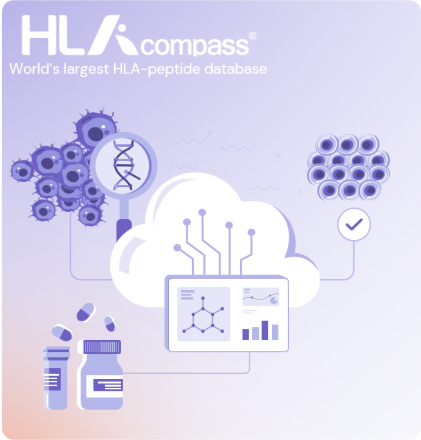
While resulting TCRs may indeed present tumor-targeting reagents and the success of the screening seems to work, a look into Alithea Bio HLA-Compass identifies ALLSGVRQV not as an abundant self-antigen, but a rather tissue-restricted antigen that may have slightly different effects on availability of endogenous TCRs than other very abundant antigens. The very specific expression in adrenal glands warrants studying the medical implications of this obvious on-target toxicity. Is it manageable?
T-Switch: A specificity-based engineering platform for developing safe and effective T cell therapeutics
precisionmedicine cancerACT Tcells cellandgenetherapy immunopeptidomics